
There’s a fracture in the autism community—one that runs deep and personal.
On one side: parents searching for hope.
On the other: advocates begging them to stop chasing lies.
I get it.
I’ve been the mom searching. I’ve also seen what happens when that search turns into obsession—when desperation becomes denial, and kids are left behind in the process.
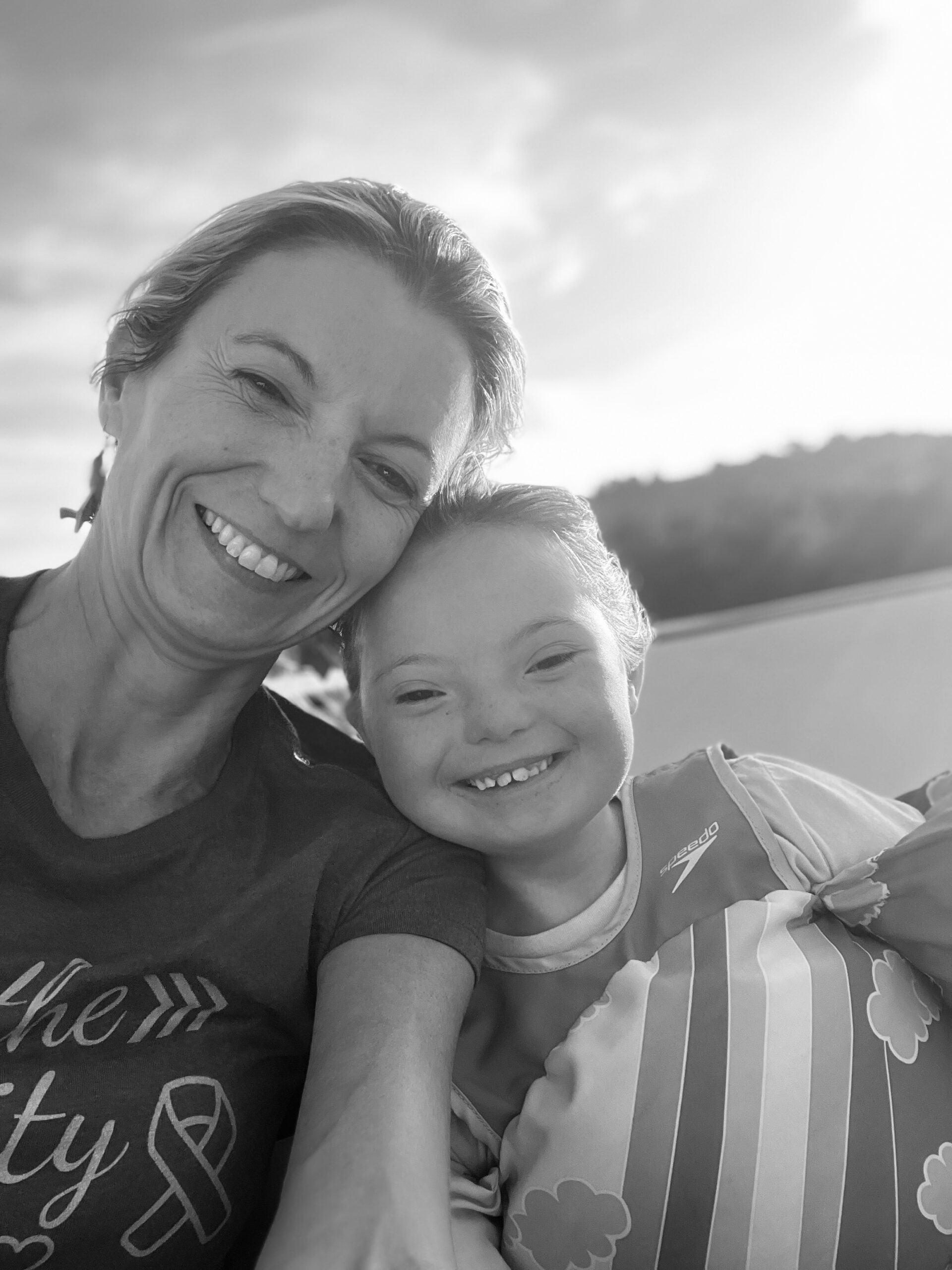
When Sienna was born, I had already experienced four miscarriages. I had spent years scrutinizing every aspect of my health—diet, exercise, alcohol consumption, birth control. I was trapped in a cycle of self-blame over those losses.
So when the doctor told me she had Down syndrome, the first four words that came into my mind were:

“This is my fault.”
I know I’m not alone in that. Many parents—especially mothers—carry the weight of guilt after a diagnosis. When there’s no clear reason why something happened, our instinct is to find one. To do something.
I remember the overwhelming mix of love, fear, and a thousand questions. I didn’t know what Down syndrome would mean for her future, and I didn’t know who to trust. I just wanted her to be okay. I wanted us to be okay.
So I understand the late-night Googling and the rabbit holes dressed up as empowerment.
It’s not ignorance.
It’s desperation—an ache for control in a world that suddenly feels wildly unpredictable. And sadly, there are people who capitalize on that desperation.
I knew a mom who gave birth around the same time I did. She was deeply rooted in the natural wellness world—essential oils, home births, anti-vax forums, a proudly libertarian mindset. Her son was eventually diagnosed with a rare genetic condition, but she had to fight for that diagnosis in a system she didn’t trust and had spent years avoiding.
Sienna’s diagnosis was handed to me in the delivery room.
My friend had to go looking for hers, and she didn’t have the tools or relationships with medical professionals to help make sense of it.
She had given birth at home to all her children. She felt betrayed by the medical community. And I understood that apprehension. I even shared some of it.
But while I leaned into early intervention, therapy, and advice from professionals, she couldn’t move past those four words: This is my fault.
She sent me links to unregulated diet plans.
She critiqued how I was feeding Sienna, how I was parenting.
When Sienna struggled to latch, she hinted that it was something I was doing wrong.
She told me that if I vaccinated her I was risking an additional diagnosis of autism.
She disagreed with the therapists that came to her home, and eventually asked them not to come at all.
When I explained why motor planning matters and why skipping crawling could impact later development, she dismissed it.
At every turn, she resisted help—not because she didn’t love her son, but because she was stuck in a spiral of self-blame. And the rhetoric from her community only deepened that wound.
Eventually, for my own peace and Sienna’s progress, I had to step back.
Her messaging was hurting me.
I remained loosely connected through social media.
And then the 2024 election happened.
She showed up in my feed, standing at a Trump rally, waving a flag that read: “Make America Healthy Again.” And just like that, it all made sense.
Another recommendation she gave me was to research Andrew Wakefield and David Geier. You may have heard about RFK Jr. hiring David Geier to explore the so-called vaccine-autism link again. I think it is important for people to understand who he is and why it matters.
David Geier, and his father Mark, built a platform around the claim that vaccines cause autism. They published flawed studies, bypassed medical ethics, and pushed dangerous, unproven treatments—like chemical castration—for children on the spectrum.
They didn’t just get the science wrong. They got the humanity wrong.
This move isn’t just offensive to families like mine—it’s dangerous to public health and to the disability community as a whole.
What does scientific based research actually say?
I know how loud the internet can get. I know how convincing a reel or a desperate Facebook group thread can seem when you’re looking for answers.
But here’s the truth:
There have been more than two dozen major studies, involving over 1.25 million children, across multiple countries—and none have found any link between vaccines and autism.
One 2014 meta-analysis reviewed data from over 1.25 million children. No connection.
The CDC, WHO, and virtually every major medical institution in the world agree:
Vaccines do not cause autism.
And yet, this myth persists—because it gives people something that the truth often doesn’t: hope, even if it’s false hope.
They take the pain of uncertainty and offer certainty—wrapped in conspiracy, pseudo-science, and fear.
They’ll tell you that your child’s disability is because of what you ate. Or what cleaning products you used. Or the vaccines you allowed.
They’ll say the FDA is corrupt (and on that point, I won’t argue—they’ve failed us too many times).
They’ll point to real flaws in our food system, our regulatory bodies, our environment—and I applaud families demanding better.
But when that advocacy turns into a blame game, it becomes something else.
Something harmful. Something distracting.
Because here’s the truth:
Some kids are just born neurodivergent. Some kids are born disabled. That’s not a failure. It’s not a punishment. It’s not an injury.
And when your first instinct is to leap to MAHA, or RFK Jr., or David Geier, or any group that frames disability as a toxin to be cleansed or a tragedy to be reversed—you lose me.
You stop seeing your child.
You start seeing a diagnosis to undo.
And you miss out on the life right in front of you.
There is a huge difference between accountability and conspiracies.
It’s okay to want answers.
It’s okay to be scared.
But we can’t let our fear make us susceptible to people who build empires on our grief.
Because here’s what’s happening right now: Mothers of children on the spectrum—children who are nonverbal, who may never be independent in the bathroom, who might not grow up to pay taxes—are watching. They’re watching high-functioning members of the autism community scramble to disprove RFK Jr.’s claims.
And yes, those claims were false.
Littered with ableism.
Laced with fearmongering.
A shallow, harmful generalization of an incredibly diverse and beautiful spectrum.
But RFK didn’t mention that.
He didn’t talk about the range of abilities.
He didn’t talk about the beauty, or the struggle, or the humanity.
Of if he did, I missed it.
He devalued the lives of children with significant support needs.
And now, those families—who already navigate a world that is exhausting and under-resourced—have a front row seat to just how deeply rooted ableism is in this country.
RFK painted their children as less than.
And I can’t let that go.
Because this?
This feels like the beginning of something very dark.

This feels like the beginning of eugenics—and I will never be okay living in a country that sees the beauty of difference as something to erase.
There are days I would give anything to have access to the path the rest of parents are on. As I have said before, I would take away the health implications in a heartbeat if I could. But like it or not, Down syndrome is a contributing factor to the recipe that is Sienna. We are better people for being handed a child with Down syndrome.
Sienna has made me many things I wasn’t before she existed – patient, empathetic, thoughtful, open minded, unapologetic, open to learning, willing to slow down. Every night at the dinner table, my heart bursts with the love I witness between my girls.
I would not know any better if I had a neurotypical child instead of Sienna, but I do know I would not be as good of a Mom or a person if she were not my child. The thought of society missing out on those gifts breaks my heart.
Intelligence is not just about intellectual ability. Emotional intelligence is important and it is lacking in so many people in this country right now. The last thing we need is to eliminate it even further.
What Now?
If you’re a parent who once believed the vaccine myth, you’re not alone. You’re not broken. You’re not beyond help. You’re just a human being trying to protect your child.
And if you’re someone still unsure—please, keep asking questions.
But ask them in places that offer answers rooted in love, science, and inclusion. Not fear.Our kids deserve truth.
They deserve protection.
And they deserve a future shaped by fact—not fraud. And yes they all deserve a future, every precious life that Republicans seems to care so much about in the womb but not outside of it.
Leave a Reply